


I was so ecstatic when I learned about the World Book Night 2012 event that will take place this Saturday! Millions of readers will be able to receive free books from literary advocates for change. The World Book Night began, in the UK, in 2011, and now will spread all over the world.
According to the website, “World Book Night is an annual celebration designed to spread a love of reading and books. To be held in the U.S. as well as the U.K. and Ireland on April 23, 2012. It will see tens of thousands of people go out into their communities to spread the joy and love of reading by giving out free World Book Night paperbacks.”
There are numerous community groups, libraries, and literary organizations involved in the event. It was a simple process to get accepted. Each participant has to explain why they want to give away books in their community. All books are free and are packaged neatly for advocates to pick up in time for their giveaways. In addition, all participants are able to check out a nice listing of books to choose from regarding their requests.
Currently, there are over 2 million adults who are illiterate in this country. We — as librarians, graduate students, and volunteers — must do everything within our power to give back to our communities. This opportunity is one of the best that I can think of and it is FREE. And, we all know that reading is fundamental and the only FREE resource that is available to the public (and totally free at libraries across the world).
I will be giving away books as part of my advocacy work through digibooklibrarian. I decided upon the book I Know Why The Caged Bird Sings, by Maya Angelou. I have read a lot of work by many of the authors on the list that I was given. I thought it was cool that they had some classics to give away. Thirty authors are on the list this year including a few here:
- Sherman Alexie
- Laurie Halse Anderson
- H. G. Bissinger
- Ocatvia Butler
- Chris Cleave
- Junot Diaz
- Tim O’Brien
- Jodi Picout
- Rebecca Skloot
- John Irving
- Marilynne Robinson
- Stephen King
- Alice Sebold
All participants will receive twenty copies of the books that they requested to give away. In addition, certificates, bookmarks, and other memorabilia will be given away to commemorate the event. Numerous events will be taking place on April 23, 2012.
Get involved with your community and make a difference in an individual’s life. Many people today are opting out of reading and it is the only way that you can make it in this world—knowing how to read. Stay abreast of this organization’s programs in the future and get your organization involved with them next year if you missed out this go-around.
Check your local literary listings in your area regarding World Book Night 2012. If you are interested in participating next year make sure you bookmark it. It is best to get registered as soon as the announcement comes out.
Happy Reading!


 I have a research paper due this week in my cataloging class regarding how electronic resources have changed cataloging practices. Don’t worry, I’m not going to regurgitate the contents of my paper to you, but the topic made me start thinking about all of the ways electronic resources and e-books have changed the library in general. Users are obviously one reason for an increase in electronic resources. They want materials delivered to them in their homes, on their laptops, on their phones, on their i-pads, and on whatever new device is innovated within upcoming years. Do users really know how much electronic resources have affected them? Do you even know in what ways users are affected?
 On March 1, I had the opportunity to attend the
 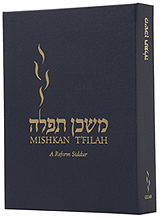 I immediately thought of my own early experience of learning to read against a text. As a child growing up in a small-ish Maine town, I attended a small Reform Jewish synagogue. The congregation was quite progressive, but because it was a fairly new synagogue with limited resources, the prayer books were on the old side. The congregation was in agreement that gender-neutral language should be used to refer to God, but the prayer books didn’t reflect this. So at the same time I was learning to read, I was learning to substitute “Parent” for “Father,” “the Eternal” for “the Lord,” “God’s” for “His,” and so on whenever there was a congregational response written into a prayer. For the most part, the Hebrew didn’t change, but there was one prayer where Sarah, Rivka (Rebecca), Leah, and Rachel were added in alongside Abraham, Isaac, and Jacob (since this was a sung prayer, it also necessitated an on-the-fly change to the rhythm and melody). As a kid who loved to read but wasn’t always thrilled with sitting still for an hour, I thought of this as a great game, a way to keep my mind engaged while I was reading, especially at a time when reading aloud without tripping over my words was still a challenge.
 African-American librarians are the gateway conservators of our history; their existence in the profession will play a vital role in the 21st century. I will never forget when I opened up Mildred Taylor’s Roll of Thunder Hear My Cry, I was in the fifth grade. The writer took me into the world of a family who believed in love, perseverance, and faith. It was also the first time that I started to understand what race meant in the United States. An African-American librarian suggested that I read the book. I will forever be grateful that she did. From that point on in my life, I started to collect books. It would never occur to me that I would one day be entering the profession of librarianship. I have come to understand today that Research Librarian, Julis Jefferson, Jr., is right when he says, “African-American librarians are culture-keepers.”